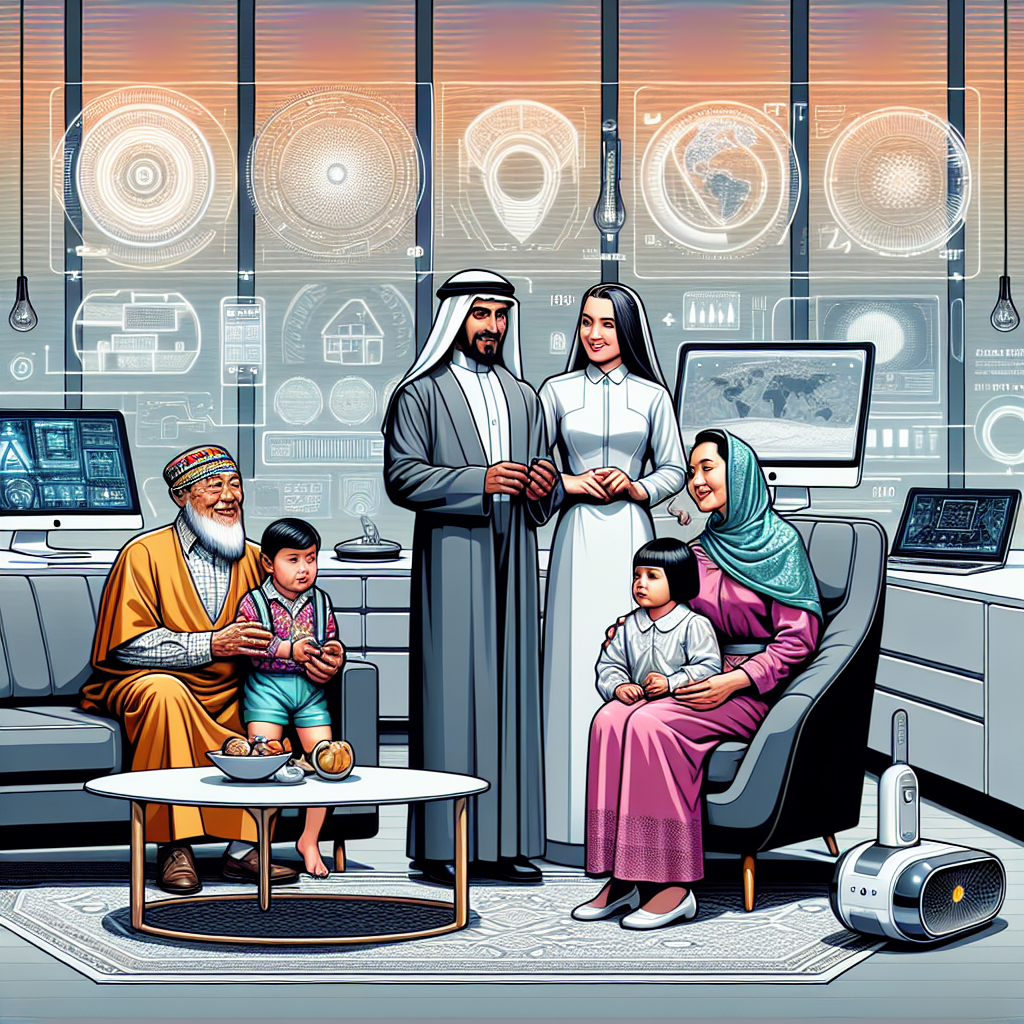
When we glance in the rearview mirror at the swinging 1960s, we often see a kaleidoscope of cultural revolutions, iconic fashion, and moonshot dreams. The family dynamics and social norms of that era were rooted in tradition yet rapidly evolving towards a vision of a futuristic society. Today, we stand at the threshold of 2030, marvelling at some predictions that hit the mark and others that veered off into the realm of retro-futurism.
The Crystal Ball of the 1960s
The 1960s were ablaze not just with the fiery spirit of youth protests and new music genres but also with forecasts for the future. Prognosticators of the era predicted a transformed societal canvas — one where technology would streamline daily life, gender roles would be redefined, and the nuclear family would thrive within a high-tech utopia.
From space-age kitchens to automated homes, the 60s ethos was geared towards an efficient, gadget-driven life that promised more freedom and leisure time for all.
Yet these images, often painted by the media and entertainment of the time, didn’t fully anticipate the complexities and shifts that the coming decades would reveal.
Family Dynamics: Forecast vs. Reality
In the ’60s, futurists envisaged the family unit as a stable, even strengthened institution, benefitting from advancements like automation and new communication technologies. The prediction was a shift towards egalitarian households, with shared responsibilities and the diminishment of traditional gender roles.
Fast forward to the present, and we find a nuanced picture. Indeed, the traditional family structure has evolved, with diverse family models flourishing, from single-parent households to same-sex partnerships. Technology has indeed fostered a certain level of ease in managing household tasks, yet the anticipated domesticity hasn’t been the central focal point of this progression.
- The lure of the digital era, futuristic entertainment, and the evolution of daily technology has significantly influenced family interactions, often bringing people together and in other instances, pulling them into individual tech-filled bubbles.
- Gender roles, though more fluid than ever before, continue to be a topic of deep social change and dialogue, rather than being a settled evolution.
The imagined conveyor belt of familial happiness and order, seen in the ’60s, may have underestimated the human complexity and our tenacity for individuality and social change.
Social Norms: Yesterday’s Dreams, Today’s Reality
Alongside family, social norms of the 1960s saw predicted transformations that both resonate and contrast sharply with today’s experiences. Forecasters predicted a society bound by high moral frameworks, driven by advancements in education and moral teachings through technology.
However, society’s moral compass has been subjected to profound debates and shifts, propelled by access to a world’s worth of information at our fingertips. Instead of unifying principles, we witness a diversification of viewpoints that has expanded our understanding of morality and ethics in a multicultural, digitally-connected world.
As we look around, we also see a burgeoning gig economy, remote work, and a breaking away from the 9-5 grind that was the unspoken mantra of the workforce back in the ’60s. The boundary between work and life has become ever more blurred, reshaping the social contract and challenging the very ethos of corporate life that was once deemed unchangeable.
As the third decade of the 21st century unfolds its leaves, we can reflect on the myriad ways in which the predictions of the past have shaped our present. Whether these forecasts served as cautionary tales, inspiration, or merely daydreams, they remain a fascinating study of society’s perpetual journey towards an envisioned future — a journey full of surprises, challenges, and continual reinvention.