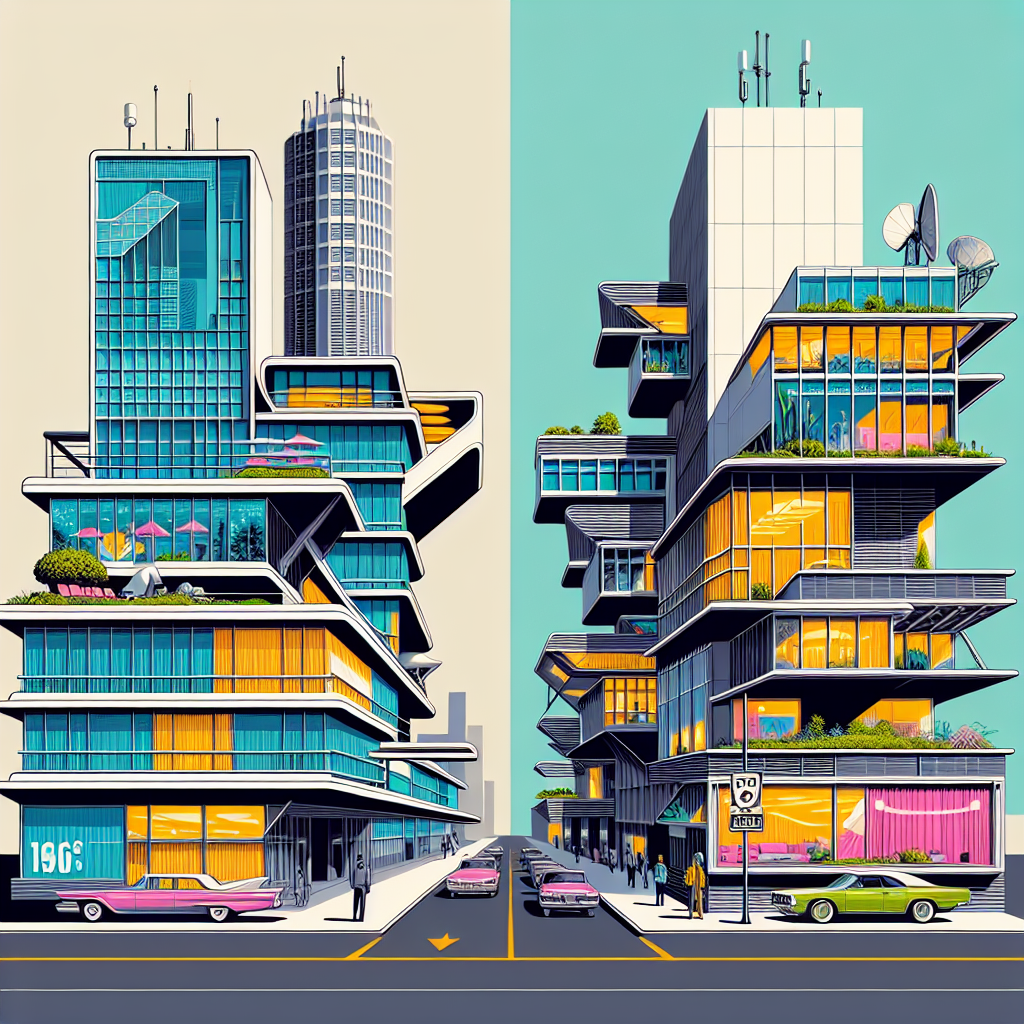
Imagine stepping into a scene straight out of a science-fiction movie — buildings that spiral into the sky, moving walkways, and homes that look like they are ready for interstellar travel. This was the dream of the 1960s, an era when architects projected a futuristic vision influenced by the space race and the promise of technological leaps. Today, as we look towards 2030, some of those dreams have materialized in ways never imagined, while others remain a charming echo of a past’s future.
The Dream of the 1960s
The 1960s ushered in an era of architectural experimentation. The style that emerged was often referred to as ‘Googie architecture’, a form of modern architecture influenced by car culture, jets, the Space Age, and the Atomic Age. Architects like John Lautner crafted buildings that symbolized optimism and forward-thinking, characterized by bold geometric shapes, the use of modern materials, and the integration of neon lights. Notable examples include Lautner’s own Chemosphere house, which resembles a UFO perched on a hillside.
“Architecture should speak of its time and place, but yearn for timelessness.” – Frank Gehry
Comparative Structures: 1960 vs. 2030
In contrast to the 1960s, the architecture of 2030 speaks a different design language, one that’s rooted in sustainability, digital integration, and flexibility. The static, grandiose structures are replaced by dynamic buildings that adjust to environmental conditions, use sustainable materials, and focus on creating interactive experiences for inhabitants. The design language has shifted from otherworldly to earth-conscious, mirroring the urgency of climate change and the advances in green tech.
For instance, buildings like the ‘Bosco Verticale’ in Milan, which stands adorned with living greenery, might be the 2030’s answer to the 1960s Googie diners with their planetary motifs and neon lights.
- Space-Age Design: How 2030 adapts what the ’60s envisioned as space-age fashion
- Advancements in Technology: Comparing the evolution of daily tech from typewriters to AI-powered devices
- Social Integration: Examining social norms of 2030 and their architectural reflections
- Entertainment Evolution: The transition from drive-in theaters to futuristic entertainment venues
Legacy and Lessons
The futuristic visions of the 1960s, while not entirely accurate, paved the way for innovative thinking in architecture. These concepts injected a dose of creativity into the collective consciousness and encouraged a break from traditional design constraints. The legacy of retro-futurism in architecture isn’t measured by how accurately it predicted the future, but by how it inspired the evolution of ideas for better and more adaptive structures.
In essence, the journey from 1960 to 2030 in architectural design offers a fascinating case study in how cultural aspirations interplay with technological realities. Whether we now live in the space-age beauty once dreamed is debatable, but one thing is clear: the dreams of the past continue to shape the landscapes of our future.